- Revenue grew 4.6% to R2.2 billion, with all sectors contributing to the growth
- Core vacancies reduced to 12.3% with improved occupancies across all sectors
- Solid progress made against asset recycling programme, 17 properties sold
- Funding facilities refinanced at improved margins and LTV reduced to 38.2%
- Total dividend 7.6% higher at a payout ratio of 78.4%
- Yield enhancing solar projects contributed to cost savings with further investments made
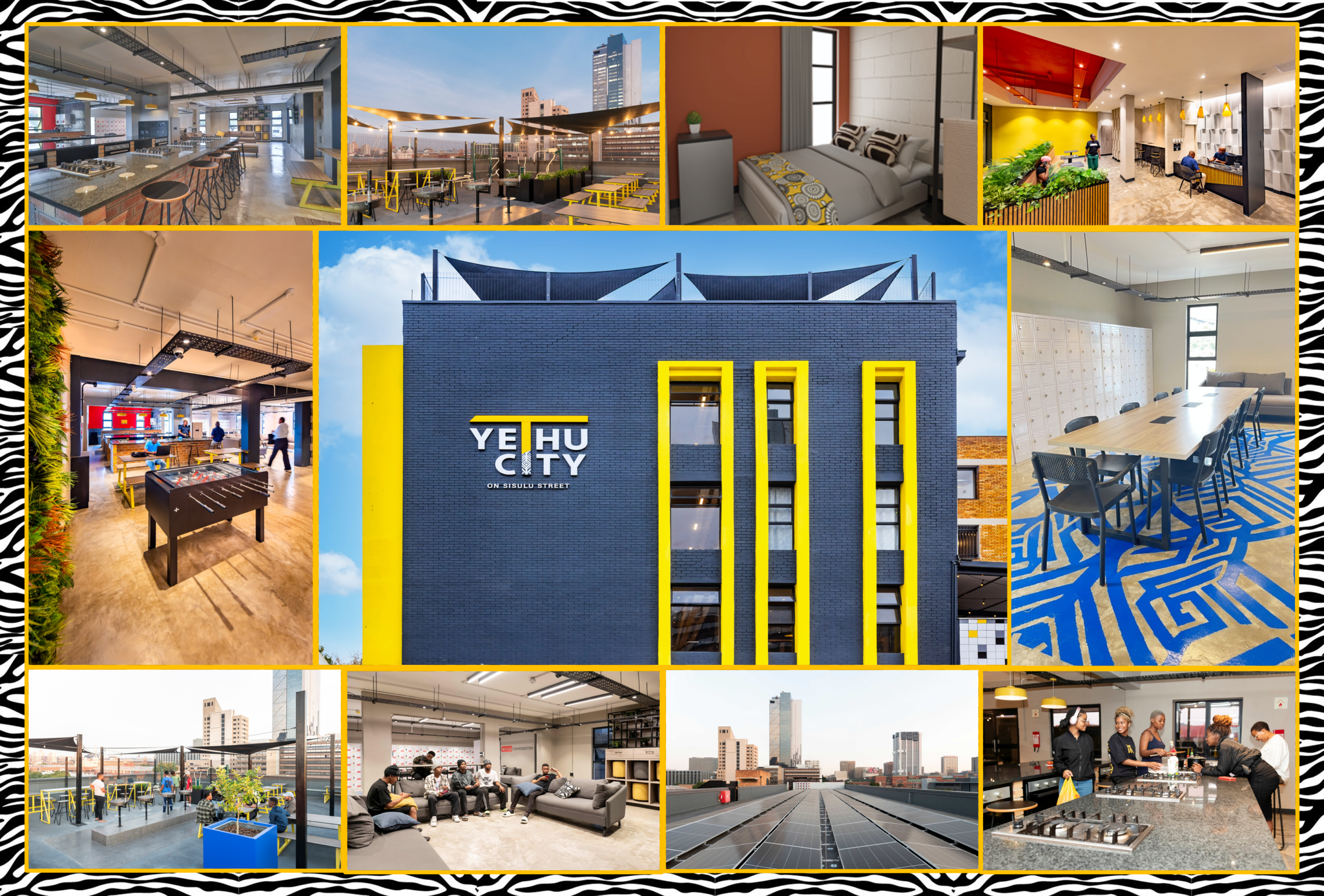
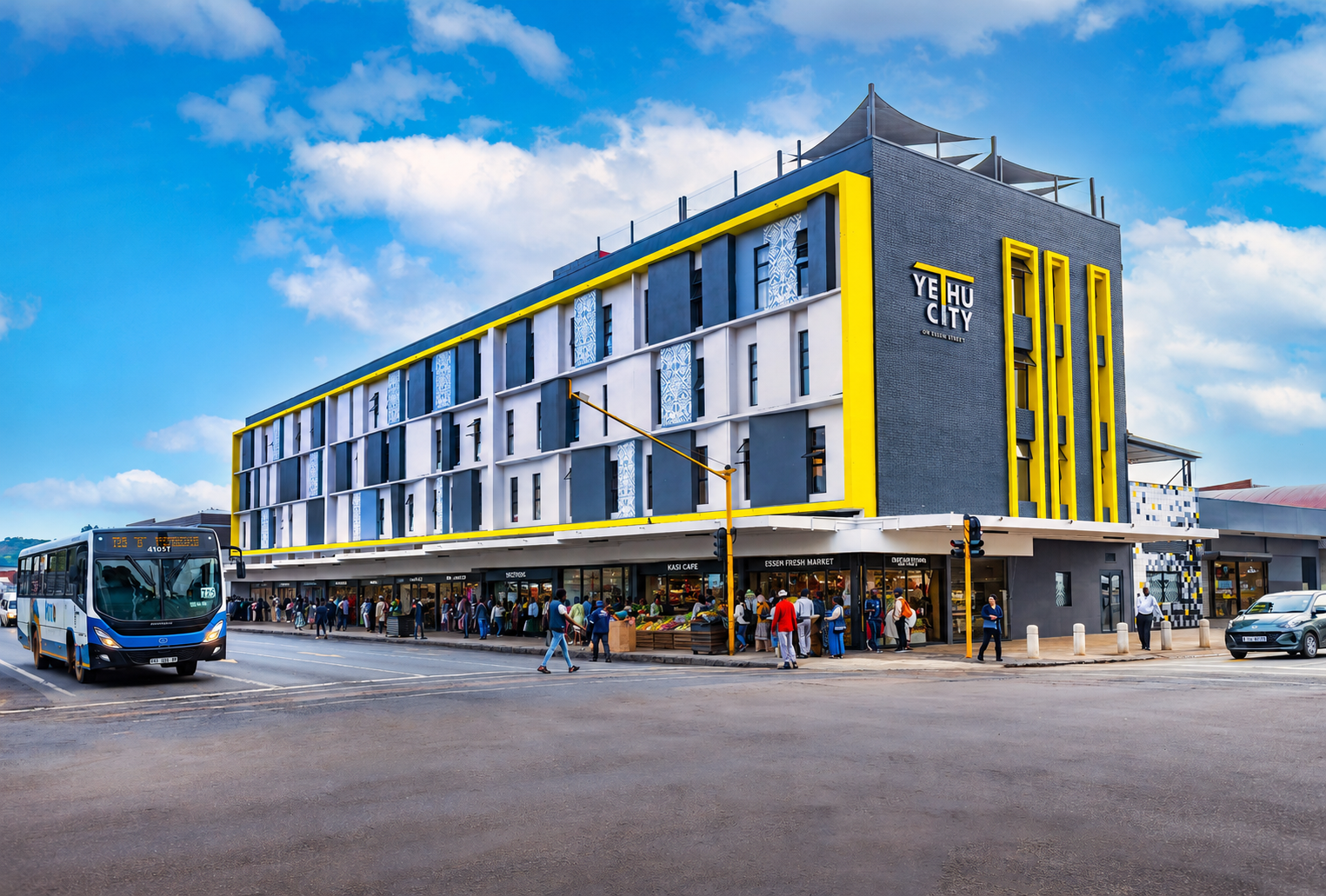
- Yethu City pilot project met with success on launch and a blueprint for future conversions
- Strategy refreshed including focused portfolio rationalisation to enhance future returns
Tuesday, 25 November 2025 – JSE-listed REIT Octodec Investments Limited today announced its annual results to 31 August 2025, reporting growth in distributable income per share of 8.2% on the back of a resilient portfolio performance. The board declared a final dividend of 72.5 cents per share, taking the total dividend for the year to 134.5 cents, a 7.6% increase on the prior year.

Commenting on the results, Jeffrey Wapnick, Octodec CEO says, “I’m proud of the progress achieved this year. Focused strategic actions and disciplined execution saw us grow rental across all sectors, meaningfully improve occupancies, secure lower funding rates, reduce debt and enhance the portfolio to drive sustainable value creation. Despite facing familiar challenges, renewed market confidence, lower inflation and declining interest rates created a more favourable operating environment which supported the overall strong performance.”
The portfolio, valued at R11.2 billion delivered revenue growth of 4.6% at R2.2 billion, with all sectors contributing to the increase, although residential and shopping centres were the strongest performers. Total core vacancies decreased from 14.9% to 12.3%, while collections remained strong at 99% of total billings and reversions moved in the right direction. Costs were tightly managed with the focus being on containing them below or in line with inflation. Net property expenses recorded an increase of 4.1%, driven mainly by above inflation increases in utilities, cleaning, and security costs, as well as bad debt provisions. Administrative and corporate expenses increased by 4.9% while net finance costs were just 0.6% higher, owing to maturing interest rate swaps, offset by improved margins on refinanced borrowings.
The Lilian Ngoyi Street in the Johannesburg CBD remained under repair for the full financial year. This negatively affected both the retail street shops and residential sector performances due to tenants of the 14 directly impacted properties having limited accessibility and being unable to trade effectively. The street was however reopened on 12 September 2025, with management optimistic about the prospects of improved trading conditions as footfall and buying patterns gradually recover.
Unpacking the sector performance
The residential portfolio achieved a decrease in vacancies from 9.2% to 8.0% and a 5.4% increase in rental income. Improved occupancy at The Fields which benefitted from an increase in the NSFAS accommodation allowance and pre-approval of NSFAS funded students had a tangible impact.
Octodec’s well located, secure, and well-maintained residential properties remain in high demand with the shortage of quality accommodation at affordable prices creating opportunities for Octodec to convert underperforming offices into residential or mixed-use assets.
The successful launch of Octodec’s communal living pilot project, Yethu City – on Sisulu, is an exciting case in point. The new product, offering a lower entry market rental, sustainability and tech-enabled features was well received, reaching full residential occupancy within ten weeks. The award-winning pilot has demonstrated strong potential for replication and scale as Octodec continues to innovate to address evolving market needs.
The portfolio of largely convenience shopping centres recorded significantly reduced core vacancies of 6.9% (FY2024: 10.0%) or 0.5% when excluding Killarney Mall which was held for sale during the period. Rental income, including Octodec’s joint venture, showed pleasing growth of 6.2%, reflecting active tenant mix management and robust demand for this retail category.
Octodec’s 50% joint venture Blaauw Village, a neighbourhood shopping centre in Pretoria North, performed exceptionally well, delivering an 81.8% increase in income, mainly due to rental income growth and cost efficiencies.
In Johannesburg, Octodec’s distinct portfolio of street retail remained challenged by tenant sustainability linked to pressure on consumers’ real disposable income and compounded by the impact of the unrepaired damage on Lilian Ngoyi Street. Rental income accordingly increased by 1.2% or 2.0% on a like-for-like basis while core vacancies declined from 14.0% to 12.0%.
Although the office sector remained under pressure with vacancies persisting, smaller, affordable spaces continued to attract niche operators and small businesses with Octodec’s strategy to repurpose underutilised office buildings in selected locations proving successful. Core vacancies decreased from 24.3% to 20.8%, partially due to the disposal of a property in Johannesburg while rental income increased by 4.9% or 8.0% on a like-for-like basis, helped by lease adjustments relating to certain government renewals.
Octodec’s industrial portfolio showed resilience, supported by steady demand for smaller, flexible spaces suited to SMEs. Core vacancies declined from 10.0% to 5.6%, mainly driven by the letting of several larger spaces. Rental income increased by 2.4% or 6.1% on a like-for-like basis, constrained by broader affordability pressures.
Executing the capital recycling and portfolio enhancement strategy
During the reporting period, Octodec invested R102.5 million in developments, improvements and larger tenant installations which will support increased earnings.
Most notable of these, is the completion of Yethu City – On Sisulu at a cost of R45.5 million, with R27.3 million incurred during the reporting period. The estimated marginal yield is between 11.0% and 12.0% and is expected to be enhanced by electricity cost savings from the solar power installation. Octodec invested R10.6 million in a sizeable yield accretive solar project at its largest asset, The Fields, with the project completed in July 2025. A further R10 million was spent on five solar projects and R10.6 million on energy efficiency management initiatives.
During the year, 17 non-core smaller properties were sold for total net proceeds of R152.3 million, at a weighted average exit yield of 9.5%. One small property, which is complementary to the Rentmeester Office Park, was acquired for R8.0 million, with a first-year yield of 9.3%.
Prudent management of borrowings and cash flow
R1.6 billion of bank funding was successfully refinanced and R155 million in unsecured corporate bonds were issued, all at improved margins, with tenors ranging between three to five years. Octodec’s hedged position was carefully managed throughout the reporting period to benefit from lower interest rates, ending the year at 71.9% of borrowings.
Proceeds from the disposal of properties were applied towards debt, reducing outstanding borrowings from R4.4 billion to R4.3 billion. The reduction in borrowings, together with a slight increase in the portfolio value led to a decrease in the group’s LTV from 39.2% to 38.2%. The all-in weighted average cost of borrowings declined from 9.5% to 9.1% and Octodec ended the period with unutilised available banking facilities of R800 million. A further R200 million in unsecured corporate bonds was raised post-year end.
Riaan Erasmus, Deputy CEO and Financial Director highlights, ”Strategic asset recycling and disciplined treasury management were key to delivering these results and to strengthening Octodec. Guided by our refreshed strategy we look forward to building on this momentum as we shape the portfolio to deliver greater value.”
Strategic focus and prospects for the year ahead
In August, Octodec’s board approved a refreshed strategy to guide the Group’s priorities over the coming years. A key pillar of the strategy is a more resolute but responsible rationalisation of the property portfolio and consideration of the nodes in which Octodec invests, to focus asset management on a portfolio that can yield increased returns. This will be complemented by a newly approved sustainability strategy which includes initiatives to access sustainable financing.
In line with the strategy, five additional properties were disposed of post year-end at a gross consideration of R48.4 million (excl. VAT), while management remains intent on executing the sale of Killarney Mall.
The relatively stable political environment, lower inflation and potentially lower interest rates following the reduction in the long-term CPI target, as well as South Africa’s removal from the FATF grey list, should provide further impetus for growth at both a macro and Octodec level.
Despite these tailwinds, economic pressures remain and FY2026 presents Octodec with the added challenge of addressing large vacancies which recently materialised at two buildings (together 18 959m²). The Yethu City concept is actively being explored as a potential solution for the one building (12 086m²) while management is marketing the other building for relet and considering its disposal. As a consequence of these vacancies, Octodec expects to achieve growth in distributable income and distribution per share of between 0.0% to 4.0% in FY2026.
“While pressures remain in the year ahead, we are encouraged by Octodec’s trajectory and are increasingly confident in the outlook. I believe the future holds promise and that Octodec is well positioned to capture new growth opportunities and enhance future returns,” concluded Wapnick.