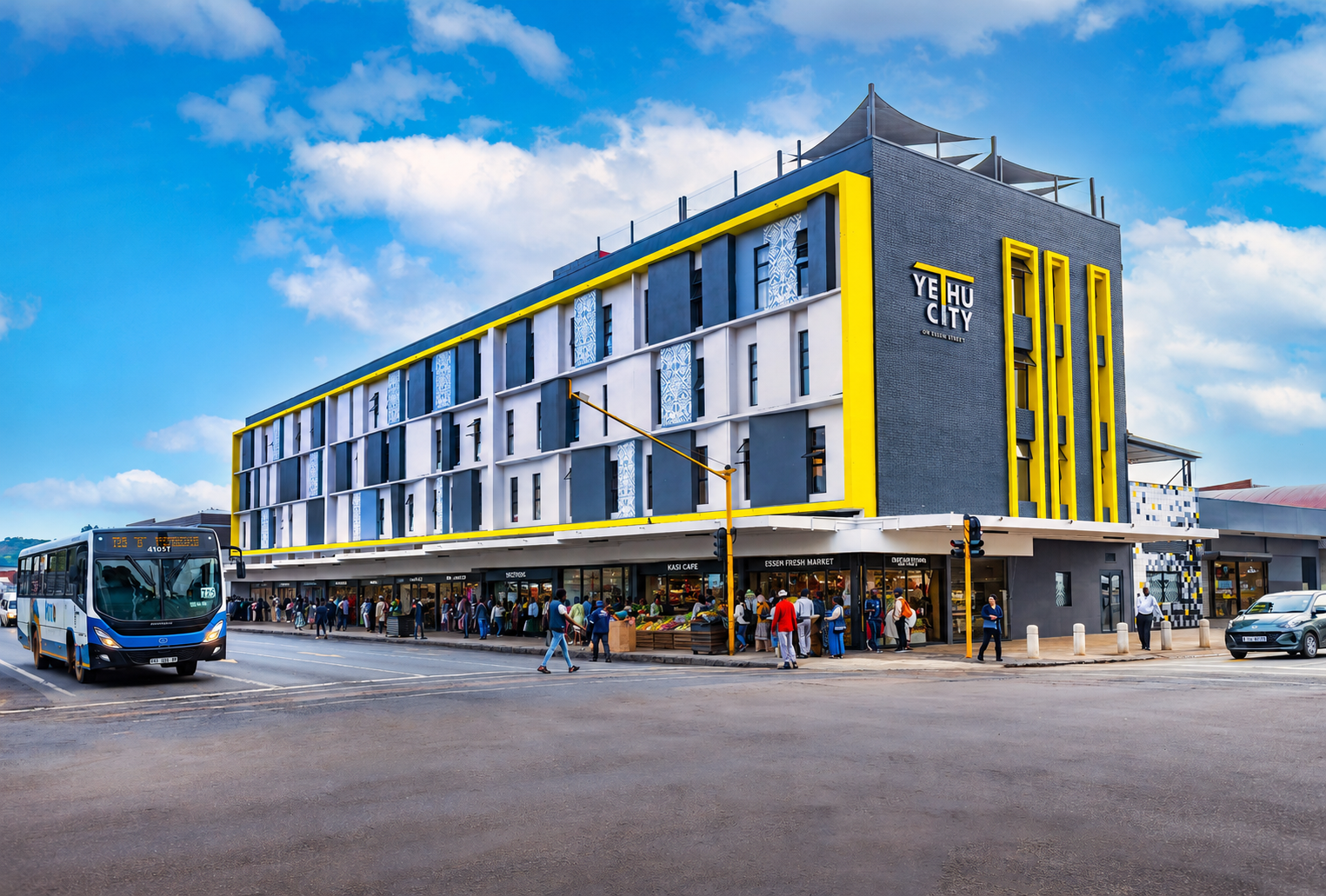
Octodec Investments’ Yethu City on Sisulu has added another accolade to its growing list of achievements, winning the Residential Development Category at the 2026 SAPOA Property Development Awards for Innovative Excellence.
The award recognises the successful transformation of a largely vacant 1940s office building in Pretoria into a thriving, technology-enabled co-living development, demonstrating how adaptive reuse can unlock commercial, environmental, and social value while responding to evolving urban living needs.
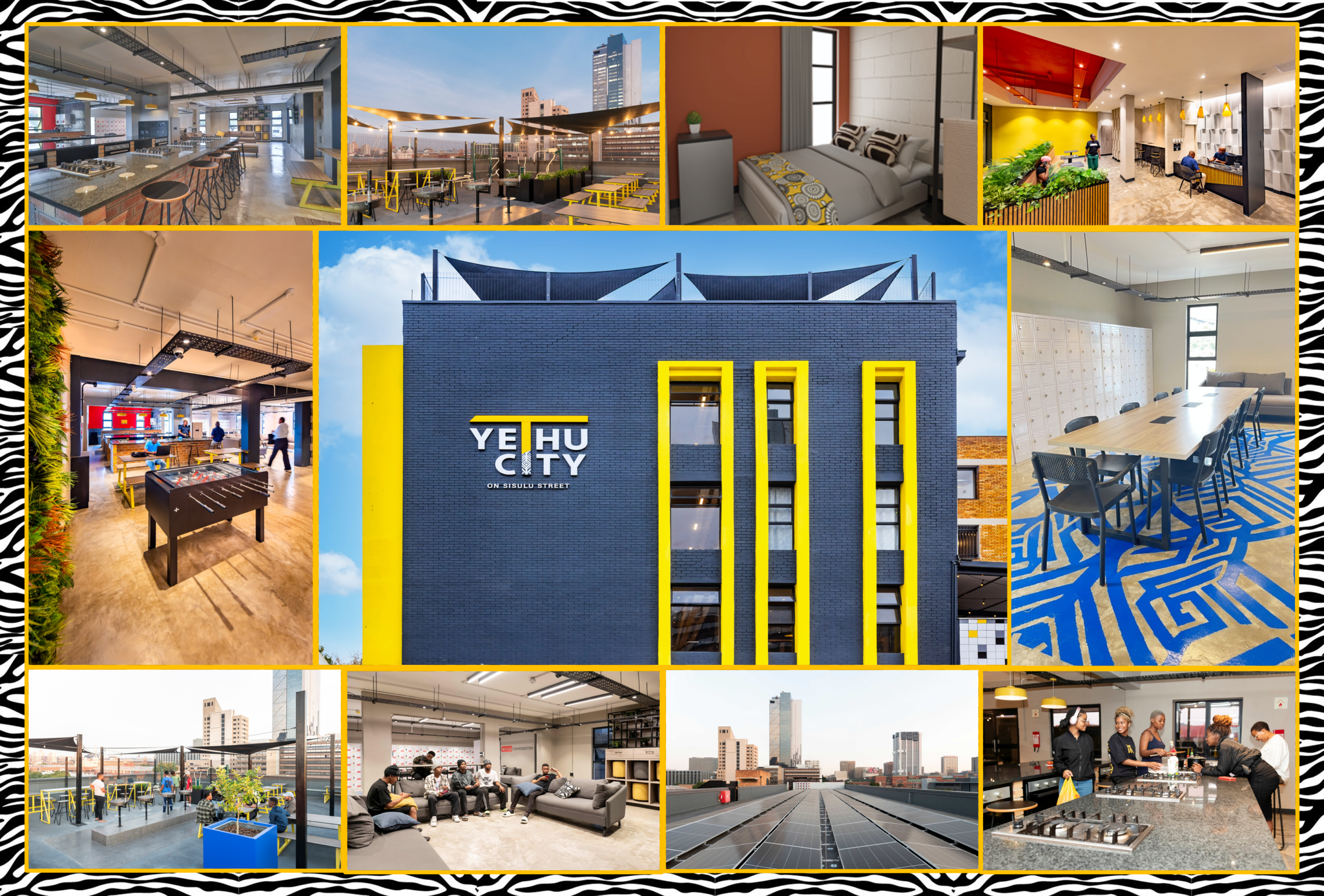
Developed and managed by City Property for Octodec, Yethu City on Sisulu transformed an underutilised commercial property into a contemporary residential offering aimed at students, young professionals, and first-time renters.
Rather than demolishing the existing structure and building anew, the development retained and repurposed the asset, significantly reducing construction waste and embodied carbon while giving the property a sustainable new lease on life.
The project reflects Octodec’s approach to unlocking value from existing assets by looking beyond their historic use and reimagining them for changing customer needs. By combining thoughtful design, technology and sustainability considerations, older buildings can be repositioned to create entirely new opportunities.
Yethu City on Sisulu provides 196 beds across approximately 3,535m² and achieved full occupancy within three months of launch, demonstrating strong demand for well-located, affordable, and professionally managed accommodation.
Its design embraces a philosophy of strategic simplicity. Existing concrete, exposed services, and structural elements were incorporated into the building’s contemporary industrial character, while communal kitchens, co-working areas, social spaces, a rooftop gym, and other shared amenities provide residents with a broader lifestyle offering at an accessible price point.
Technology is central to the development model. Biometric facial-recognition access, smart utility metering, a digital tenant platform, and QR-enabled water management systems have been integrated to enhance security, operational efficiency, and the resident experience. Sustainability features, including solar-hybrid energy systems and heat-pump technology, further contribute to resource efficiency, with the water-heating system reducing energy consumption by up to 60%.
For Octodec, Yethu City demonstrates how adaptive reuse can simultaneously address social, environmental, and commercial objectives. By bringing a previously underutilised property back into productive use and providing quality accommodation close to employment opportunities, educational institutions, and public transport networks, the development creates value for residents while supporting broader precinct development objectives.
The SAPOA recognition reinforces the potential of this approach to be replicated across suitable parts of Octodec’s portfolio as the Group continues to explore innovative ways of repositioning assets in response to changing customer needs and market dynamics.
The award also builds on a series of industry recognitions received by Yethu City, including EDGE Advanced certification from the IFC and recognition at both the 2025 API Summit and 2026 Reside Summit. Together, these acknowledgements reflect the development’s success in combining adaptive reuse, sustainability, innovation, and customer-focused design.
More than an award-winning development, Yethu City serves as a blueprint for how existing buildings can be reimagined to create vibrant spaces where people can live, work, and connect, while unlocking new value from underutilised assets.